

For many people, the idea of improving a smile is exciting—but wearing traditional metal braces may feel less appealing. Invisalign clear aligners offer a more discreet orthodontic option for certain teens and adults. The removable trays are designed to gradually guide teeth toward planned positions without brackets and wires.
If you are researching Invisalign in Roswell, NM, understanding the process can help you prepare for a productive dental consultation. Clear aligners can be convenient, but they still require professional planning, consistent wear, good oral hygiene, and follow-up care.
This article provides general education and is not a diagnosis or personalized treatment recommendation. A dentist or orthodontist must examine your teeth, gums, bite, and dental records to determine which treatment is appropriate.
Understanding Invisalign and Clear Aligner Treatment
What is Invisalign?
Invisalign is a brand of clear aligner therapy. Treatment uses a planned series of transparent, removable trays that fit closely over the teeth. Each set applies controlled pressure intended to produce gradual tooth movement.
Because the aligners are transparent, they tend to be less noticeable than conventional braces. They can also be removed for meals, brushing, and flossing. However, removable does not mean optional. Aligners generally need to be worn consistently according to the treating clinician’s instructions.
Invisalign is not simply a cosmetic cover placed over the teeth. It is orthodontic treatment that changes tooth position and may affect the bite. Safe care therefore begins with a professional evaluation rather than an impression kit or appearance-based assessment alone.
What concerns can clear aligners address?
Depending on the individual case, clear aligners may be considered for concerns such as:
- Crowded or overlapping teeth
- Small spaces between teeth
- Teeth that appear rotated or uneven
- Certain overbite, underbite, open-bite, or crossbite patterns
- Teeth that have shifted after previous orthodontic treatment
Suitability depends on much more than how straight the front teeth look. The clinician must also consider tooth roots, jaw relationships, gum health, existing restorations, and the way the upper and lower teeth meet.
Some complex movements or bite problems may respond more predictably to braces, a combination of treatments, or specialist orthodontic care. A trustworthy recommendation should focus on oral health and a stable bite—not only on whether aligners are preferred.
Who may be a good candidate?
A suitable candidate usually has healthy teeth and gums, a concern that can reasonably be managed with aligners, and the willingness to follow the treatment plan. Since the trays can be removed, daily cooperation matters. Frequently leaving them out may slow progress or prevent the trays from fitting as intended.
Clear aligners may appeal to working adults, college students, teens, or anyone who wants a less visible option. They can also make regular brushing and flossing more straightforward because there are no fixed brackets to clean around.
Active tooth decay, inflamed gums, or other untreated dental problems may need attention before orthodontic movement begins. Existing crowns, bridges, implants, or missing teeth do not automatically rule out treatment, but they can influence planning. Unlike natural teeth, dental implants do not move through the jaw in the same way, so their position must be considered carefully.
What happens during the consultation?
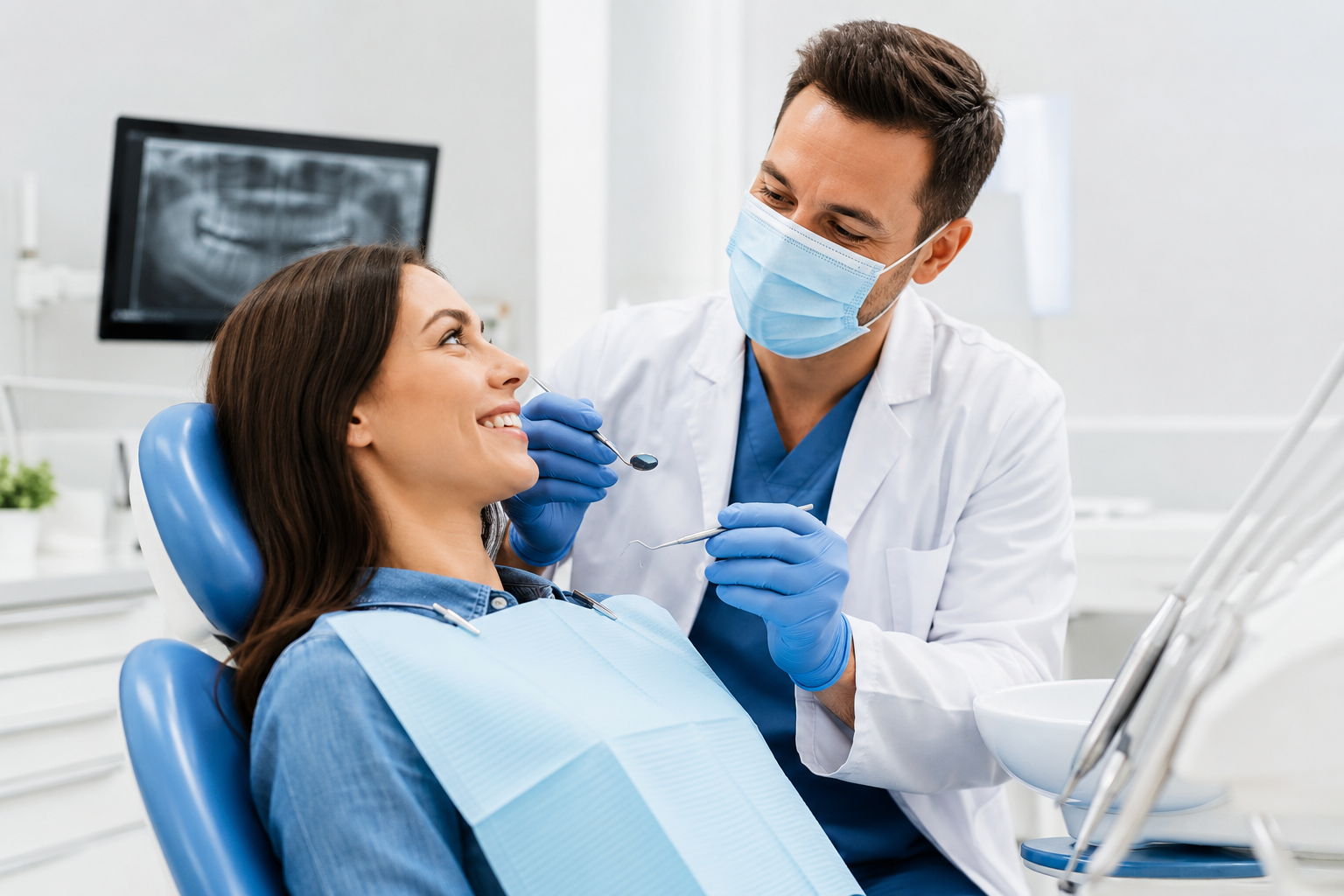
An Invisalign or clear aligner consultation typically begins with a conversation about your goals. Some patients want to correct one visibly crooked tooth, while others are concerned about crowding, spacing, or how their bite feels.
The clinical evaluation may include an examination of the teeth and gums, a bite assessment, photographs, scans or impressions, and appropriate dental imaging. Digital planning technology can create a proposed sequence of movements, but the clinician’s judgment remains essential. A computer preview is a planning tool, not a promise of an exact result.
Before accepting treatment, patients should understand:
- The specific problems the plan is intended to address
- Whether attachments or other supportive procedures may be needed
- How often progress will be monitored
- What happens if an aligner is lost, damaged, or stops fitting
- Whether additional aligners could be required
- What the fee includes, including retainers and follow-up care
Attachments and other parts of treatment
Some plans involve small, tooth-colored shapes called attachments. These are bonded temporarily to selected teeth and give the aligners an improved surface for applying pressure. Although attachments are usually subtle, they may make the trays slightly more noticeable.
A clinician may also recommend creating a very small amount of space between selected teeth or using elastic bands to help guide bite correction. These steps are not necessary in every case. When recommended, the dentist or orthodontist should explain their purpose, alternatives, and possible risks before proceeding.
What does wearing aligners feel like?
A new aligner may feel snug and can cause temporary pressure or tenderness. The edges may occasionally irritate the cheeks, lips, or tongue. Patients should contact the treating office if discomfort is severe, an edge is causing an ongoing sore, or a tray will not seat properly.
The trays normally come out for eating and for drinking anything that could stain or damage them. Teeth should be cleaned before the aligners go back in whenever practical. Placing trays over food residue or sugary liquid can leave teeth exposed to an unhealthy environment.
Aligners also need gentle cleaning. Hot water can distort the plastic, while abrasive products may scratch it. Patients should follow the cleaning directions provided with their specific aligner system.
Oral hygiene during clear aligner treatment
Straighter teeth can be easier to clean in some situations, but aligners do not prevent cavities or gum disease. Plaque still collects on teeth, and trays can hold material against the enamel if they are replaced without cleaning.
Daily habits should include thorough brushing, cleaning between the teeth, and keeping scheduled dental visits. A patient who notices persistent gum bleeding, swelling, pain, unusual sensitivity, or a damaged tooth should contact a dental professional rather than waiting for the next orthodontic check.
Routine dental care remains separate from aligner monitoring. Progress appointments evaluate tooth movement and tray fit, while preventive visits focus on overall oral health.
Invisalign versus traditional braces
Neither option is automatically better for everyone. Invisalign offers a discreet appearance, removable trays, and fewer food restrictions because the aligners come out during meals. The tradeoff is that success depends heavily on consistent wear and responsible tray care.
Traditional braces remain on the teeth and do not rely on remembering to put them back in. They may also provide advantages for certain complex movements. However, brackets and wires are more visible and require extra attention during eating and cleaning.
The best choice depends on the bite problem, treatment goals, lifestyle, oral health, and professional recommendation. Patients should be cautious of any provider or mail-order option that promises a particular outcome without a complete clinical evaluation.
How long does Invisalign treatment take?
There is no single timeline that applies to every smile. Treatment length depends on the starting tooth positions, the bite correction required, biological response, consistency of aligner wear, and whether the plan needs adjustments.
Minor alignment may require less time than comprehensive bite correction, but only the treating clinician can provide a meaningful estimate after an examination and records. Even then, the schedule may change if teeth do not move as planned or if trays are not worn consistently.
Finishing the active series is also not the end of orthodontic care. Retainers are commonly used afterward because teeth can shift. The type of retainer and recommended wear schedule should come from the clinician overseeing treatment.
What affects the cost of Invisalign in Roswell, NM?
The cost of Invisalign in Roswell, NM can vary because treatment plans differ. Factors may include case complexity, the expected amount of professional monitoring, imaging or records, the number of aligners, additional refinement trays, and whether retainers are included.
Dental insurance may provide orthodontic benefits, but coverage, age limits, waiting periods, and lifetime maximums vary. Patients should ask the dental office and insurance carrier for a written explanation of estimated fees and benefits. Financing or payment arrangements may also be available, depending on the provider.
Price is important, but it should not be the only consideration. Direct professional oversight, careful diagnosis, access to follow-up care, and a plan for unexpected problems all contribute to the value and safety of treatment.
Questions to ask before starting
- Is clear aligner treatment appropriate for the full bite or only the visible teeth?
- Who will plan and monitor the case?
- Are there dental problems that should be treated first?
- Will attachments, elastics, or other procedures be necessary?
- How will progress be evaluated?
- What is included in the quoted fee?
- What happens if the planned result is not reached with the first set of trays?
- Are retainers included, and what follow-up is recommended?
Frequently Asked Questions
Can a patient eat while wearing Invisalign?
Aligners are generally removed for meals. Patients should follow their clinician’s instructions about beverages and tray care. Eating with trays in place may damage or stain them and can trap food against the teeth.
Does Invisalign affect speech?
Some people notice a temporary change in speech when they first begin wearing aligners. The tongue often adapts as the patient becomes accustomed to the trays. A persistent or significant problem should be discussed with the treating clinician.
Can someone with crowns or fillings use clear aligners?
Possibly. Fillings and crowns are common, but their condition and location can affect planning or attachment placement. A clinical examination is needed to determine whether the teeth and restorations are healthy enough for orthodontic treatment.
What if an aligner is lost?
The patient should contact the treating office promptly rather than guessing whether to move forward or return to a previous tray. The right instruction depends on where the patient is in the treatment sequence and how the teeth are tracking.
Are clear aligner results permanent?
No orthodontic provider can guarantee that teeth will never shift. Retainer use and ongoing dental care are important after active treatment. Patients should follow the personalized retention plan and report changes in fit or tooth position.
Exploring Clear Aligner Care in Roswell
Clear aligners can provide a comfortable-looking and convenient path toward a straighter smile for appropriately selected patients. The most important first step is a complete evaluation that considers oral health, tooth movement, bite function, daily habits, and long-term retention.
Patients exploring Invisalign in Roswell, NM can contact Carabelli Dental with questions about their oral health and appropriate next steps. The team can evaluate dental needs and explain whether clear aligner assessment or an orthodontic referral should be considered. A conversation with a dental professional can help each patient make an informed, confident decision.